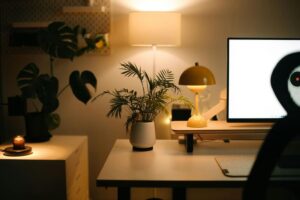


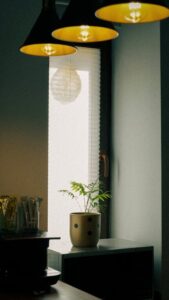
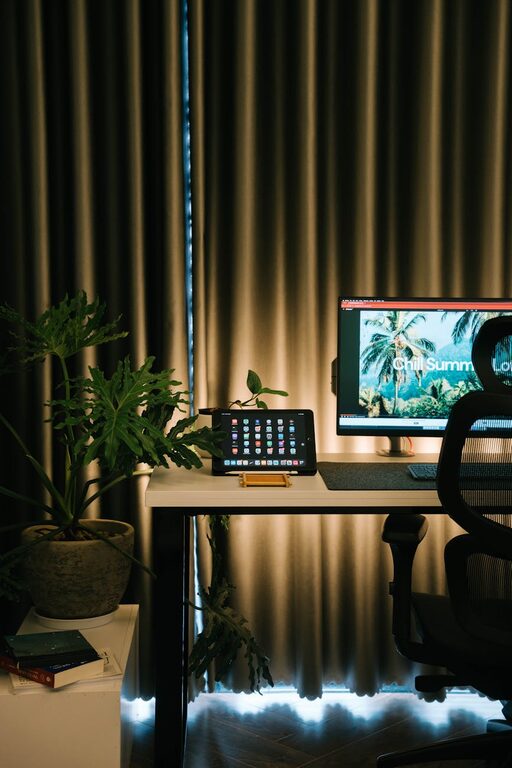
Creating a relaxing home workspace is essential for anyone looking to work productively while maintaining comfort and reducing stress. Whether you are new to working from home or have been doing it for a while, a well-designed workspace can make a significant difference in your mindset, focus, and overall work satisfaction.
In this post, we will explore useful tips to help you set up a home workspace that promotes relaxation and efficiency at the same time.
Why a Relaxing Workspace Matters
A comfortable and calming environment supports mental clarity and helps minimize distractions. When your workspace feels inviting, you are more likely to stay motivated and complete your tasks with less fatigue.
Stress and discomfort can impair concentration, leading to slower progress and burnout. Designing a workspace that nurtures your well-being encourages better work habits and can improve your daily performance.
Choose the Right Location
Pick a Quiet, Well-Lit Spot
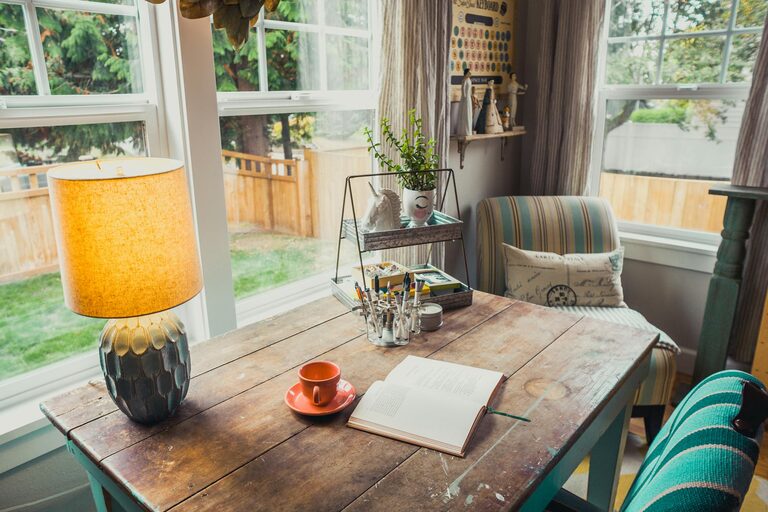
Find a spot in your home that offers natural light and minimal noise. Natural lighting helps regulate your body’s internal clock and reduces eye strain. If natural light isn’t available, consider full-spectrum or daylight-balanced lamps.
Separate Work from Relaxation Areas
Try to set up your workspace away from areas associated with leisure, such as your bedroom or living room couch. This helps your brain associate this space specifically with work, enhancing focus and work-life boundaries.
Invest in Comfortable and Functional Furniture
Select an Ergonomic Chair
An ergonomic chair with good lumbar support can prevent back pain and help maintain proper posture. Look for adjustable features that fit your height and workspace setup.
Opt for a Desk that Fits Your Needs
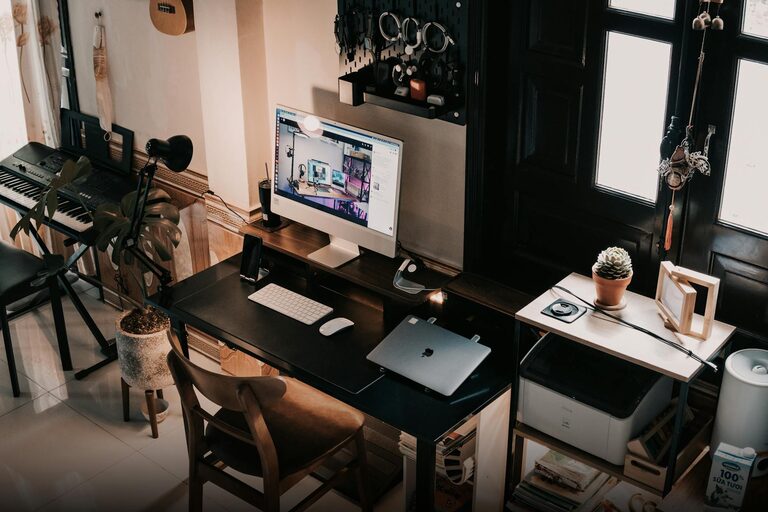
Your desk should be spacious enough to accommodate your computer, notebooks, and other work essentials without clutter. Consider adjustable desks that allow sitting and standing positions for variety.
Keep Your Workspace Organized
Use Storage Solutions
Keep your desk tidy with storage bins, shelves, or drawers. Having a place for everything can reduce stress and help you find things quickly.
Declutter Regularly
Make it a habit to clear your workspace at the end of each day. A clean environment promotes calmness and prepares you for a fresh start.
Incorporate Soothing Elements
Add Greenery
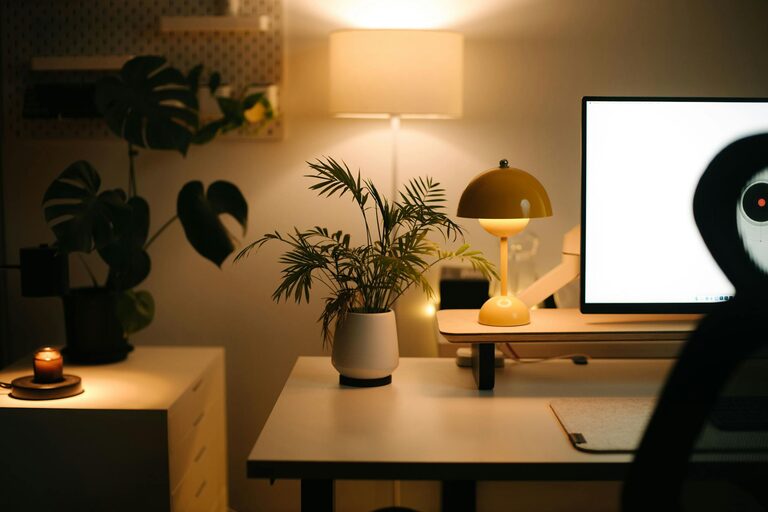
Plants not only improve air quality but also create a relaxing atmosphere. Choose easy-to-care-for plants like snake plants or succulents.
Use Calming Colors
Colors such as soft blues, greens, or neutral tones can evoke a sense of peace. You might want to incorporate these colors through wall paint, artwork, or accessories.
Manage Noise Levels
Use Noise-Canceling Headphones
If you are in a noisy environment, noise-canceling headphones can help you concentrate by minimizing background sounds.
Play Soft Background Music
Instrumental or ambient music can create a calming backdrop without distraction. Test what works best for your focus.
Personalize Your Space
Include Inspiring Items
Display photos, motivational quotes, or artwork that uplifts your mood and encourages creativity.
Maintain Minimalism
While personal touches are important, keep decorations minimal to avoid visual clutter.
Prioritize Good Air Quality and Temperature
Ventilate Your Space
Open windows regularly for fresh air or use air purifiers to reduce indoor pollutants.
Keep the Temperature Comfortable
Adjust heating or cooling to stay comfortable, as extreme temperatures can affect concentration.
Take Breaks and Move
Schedule Regular Breaks
Brief breaks every hour can reduce mental fatigue. Use this time to stretch, walk around, or practice deep breathing.
Create a Stretching Area
If space permits, designate a small corner for simple stretches or light exercises to energize your body during breaks.
Optimize Lighting for Different Tasks
Use Task Lighting
A desk lamp with adjustable brightness helps you focus on detailed tasks without straining your eyes.
Reduce Screen Glare
Position your computer screen to avoid reflections, and consider using an anti-glare screen protector.
Final Thoughts
A relaxing home workspace is a vital foundation for productive, comfortable, and enjoyable workdays. Small changes, like organizing your desk, adding a plant, or improving lighting, can have lasting positive effects on your mood and efficiency. Take time to design a space that feels right for you, and remember to adjust it as your needs evolve.
By creating a calming environment that meets your physical and mental needs, you set yourself up for long-term success, whether working from home part-time or full-time. Prioritize comfort and tranquility, and productivity will naturally follow.